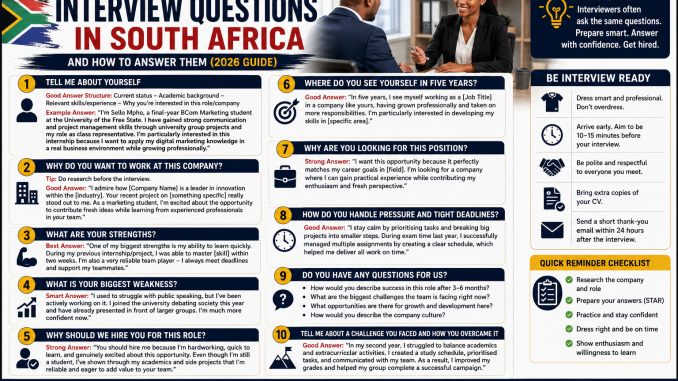
Breathe easy. Tough moments happen, particularly when you are starting out, still learning the ropes. Here is a secret. Interviewers often repeat themselves, sticking to familiar ground, asking what they always ask.
This guide covers ten typical interview questions in South Africa. Expect clear examples plus practical advice that works. Each answer idea aims to show your strengths without effort. Some replies focus on experience, others highlight attitude. You get what hiring managers often ask – no guesswork needed. Real responses are included along with small but useful details. The goal is clarity, nothing more. Think of it as a behind-the-scenes look at local interviews. Every tip fits actual conversations people have had. Straightforward input for those preparing quietly.
1. Tell Me About Yourself
Most times, it shows up right away.
Good Answer Structure: Current status (student/recent graduate) – Academic background – Relevant skills or experience – Why you’re interested in this role/company
Example Answer: “I’m Sello Mpho, a final-year BCom Marketing student at the University of the Free State. I have gained strong communication and project management skills through university group projects and my role as class representative. I’m particularly interested in this internship because I want to apply my digital marketing knowledge in a real business environment while growing professionally.”
2. Reasons for Wanting to Work at This Company?
Tip: Do research before the interview.
Good Answer: “I admire how [Company Name] is a leader in innovation within the [industry]. Your recent project on [something specific] really stood out to me. As a marketing student, I’m excited about the opportunity to contribute fresh ideas while learning from experienced professionals in your team.”
3. What You’re Good At?
Best Answer: “One of my biggest strengths is my ability to learn quickly. During my previous internship/project, I was able to master [skill] within two weeks. I’m also a very reliable team player – I always meet deadlines and support my teammates.”
4. What You Struggle With Most?
Smart Answer: “I used to struggle with public speaking, but I’ve been actively working on it. I joined the university debating society this year and have already presented in front of larger groups. I’m much more confident now.”
5. Reasons You Fit the Role?
Strong Answer: “You should hire me because I’m hardworking, quick to learn, and genuinely excited about this opportunity. Even though I’m still a student, I’ve shown through my academics and side projects that I’m reliable and eager to add value to your team.”
6. Where You Might Be in Five Years?
Good Answer: “In five years, I see myself working as a [Job Title] in a company like yours, having grown professionally and taken on more responsibilities. I’m particularly interested in developing my skills in [specific area].”
7. Reasons for Seeking the Position?
Strong Answer: “I want this opportunity because it perfectly matches my career goals in [field]. I’m looking for a company where I can gain practical experience while contributing my enthusiasm and fresh perspective.”
8. Handling Pressure and Tight Deadlines?
Good Answer: “I stay calm by prioritising tasks and breaking big projects into smaller steps. During exam time last year, I successfully managed multiple assignments by creating a clear schedule, which helped me deliver all work on time.”
9. Ask Your Questions?
Curious minds dig deeper. Try this one out loud – how would you describe a win here by month six?
Right now, what hurdles stand tallest for the group?
Where might things grow, given room to learn? How could new chances show up when effort follows curiosity?
10. Tell Me About a Challenge You Faced and How You Overcame It
Start with a clear story setup using past moments. Then describe what needed doing at that time. Follow by steps you personally followed through. End showing what actually happened afterward. Clothes matter down there – stick to clean, smart looks without overdressing. Aim to reach the place well before schedule demands it. Show respect in every chat, even brief ones at entry desks. Hold on to printed versions of your work history just in case. Drop a short message later thanking them for their time. If another piece helps you move forward, simply state “Next” whenever ready.
Leave a Reply